

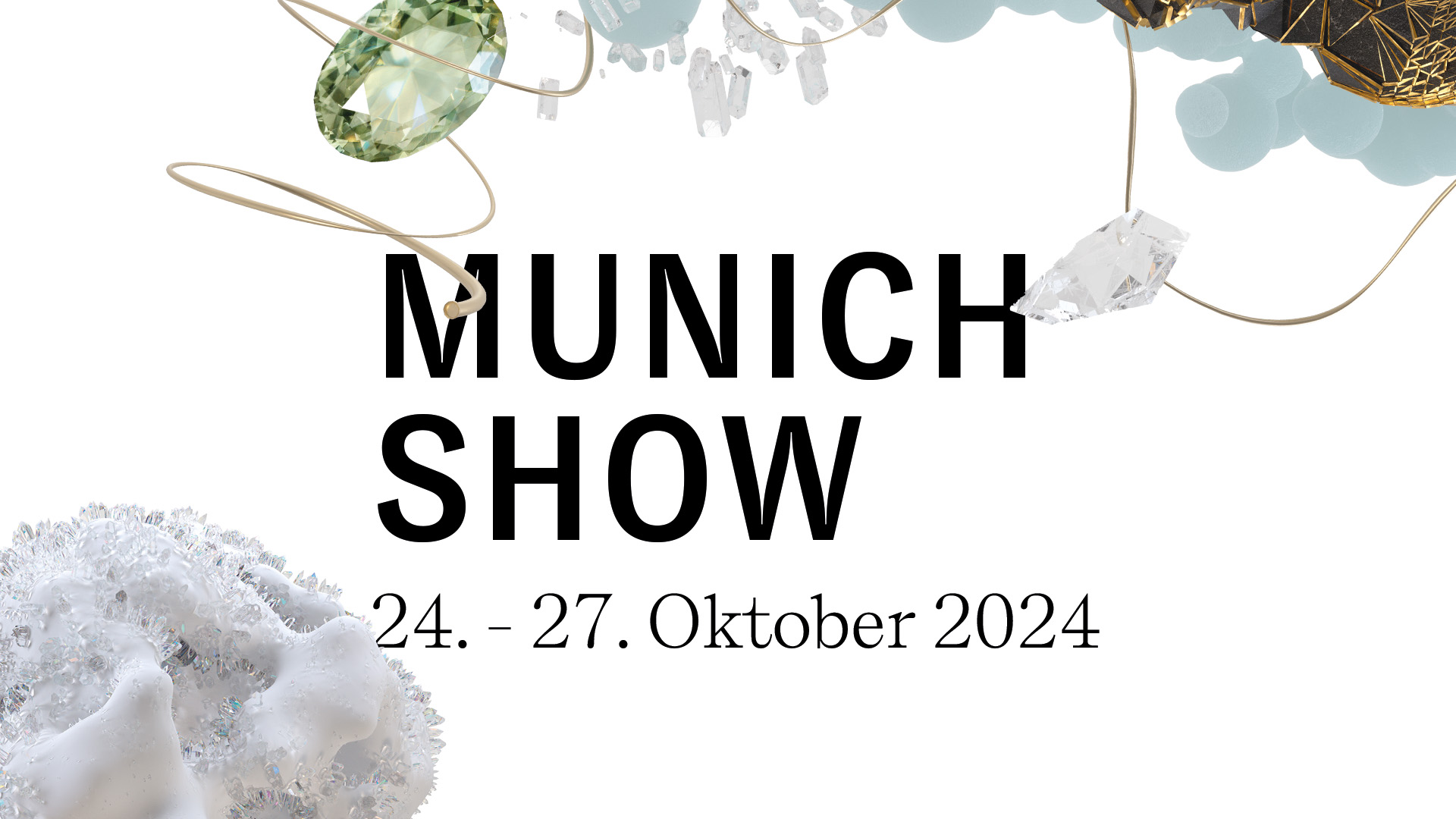
Herzlich Willkommen zu Europa’s größter Messe für Mineralien, Fossilien, Edelsteine & Schmuck!





Mehr als eine Messe
Die Munich Show – Mineralientage München ist Handelsplattform und Kulturveranstaltung zugleich: Als größte Fach- und Publikumsmesse für Naturschätze zieht sie Profis, Sammler und Experten aus der ganzen Welt an. Mit einem hochkarätigen Rahmenprogramm und sorgsam kuratierten Sonderausstellungen bietet sie dem Publikum zudem Education und Awareness in einer einzigartigen Atmosphäre.
Einzigartige Atmosphäre
Wiedersehensfreude, gespannte Aufregung, nachhaltige Inspiration: Auf der Munich Show verbinden sich Professionalität und familiäre Herzlichkeit zu einer von Besuchern wie Ausstellern geschätzten, einzigartigen Atmosphäre. Mit bayrischer Lebensart und einem exzellenten kulinarischen Angebot bietet die Stadt München zudem das perfekte Umfeld, um den Messeabend aufs Angenehmste ausklingen zu lassen.
Hochkarätige Sonderschauen
Seit Gründung der Munich Show – Mineralientage München steht die Leidenschaft für schöne Steine und deren Weitergabe an die junge Generation im Zentrum der Veranstaltung. In Kooperation mit Sammlern und Museen entstehen jedes Jahr aufwendig gestaltete Sonderschauen mit weltweit bekannten Exponaten, die so noch nie zusammen zu sehen waren.
Perfekte Infrastruktur
Ideal im Herzen Europas gelegen, bietet die Munich Show - Mineralientage München eine perfekte internationale Anbindung sowie mit der Weltstadt München ein attraktives Umfeld für den Messebesuch. Auf einem der modernsten Messegelände der Welt treffen sich Aussteller und Besucher auf kurzen Wegen im hochwertigen Ambiente, zudem stehen zahlreiche Dienstleister mit begleitenden Angeboten zu Logistik, Standbau oder Marketing auf dem Gelände bereit.
Umfangreiches Rahmenprogramm
Eine Vielzahl von branchenrelevanten Vorträgen und Veranstaltungen bietet Besuchern und Ausstellern an den vier Messetagen die Möglichkeit, ihr Wissen zu erweitern, neue Themen zu entdecken und interessante Kontakte zu knüpfen.
Großes Kinder- und Familienprogramm
Ein besonderes Anliegen der Munich Show ist es, die Begeisterung für Mineralien und Fossilien an die nächsten Generationen weiterzugeben. Deshalb finden auf der Messe zahlreiche Kinderaktionen wie Edelsteinschleifen, Fossilienspalten, Haifischzahnsieben und Geodenknacken statt und machen die Münchener Messe zu einem beliebten Ausflugsziel für die ganze Familie.
Aussteller 2023
Hier finden Sie das interaktive Ausstellerverzeichnis der Munich Show 2023.
ANZEIGEN
Praktische Informationen für Ihren Messebesuch
Datum 2024:
Do., 24. bis So., 27. Oktober
(Do./Fr.: nur für registrierte Fachbesucher)
Öffnungszeiten:
9:00 Uhr – 18:00 Uhr
Veranstaltungsort:
Messe München / Eingang OST
(U2 Haltestelle „Messestadt OST“)
Tel: +49 (0)89/ 613 47 11
Fax: +49 (0)89/ 613 54 00


